

Advancing AI Research in Educational Measurement: Perspectives from Researchers and NCME Journal Editors
October 21 @ 1:00 pm – 2:00 pm EDT
This is presented by the Training & Development Committee
Artificial intelligence is opening new possibilities for educational measurement while raising important questions about how we design assessments, interpret results, and evaluate evidence. This panel brings together three NCME journal editors and a senior AI researcher who has published in NCME journals to explore what these developments mean for the field, what their research has established, what remains unsettled, and where the next questions lie. The aim is to give NCME members a working view of the current research front, and to hear directly from the researchers and journal editors shaping it.
Drawing on editorial and research perspectives, panelists will discuss emerging AI applications in the measurement field. Editors will also share their journals’ areas of focus, perspectives on AI-related submissions, and expectations for the methodological rigor and substantive contributions of such work, and how researchers and journals can help shape responsible AI use in educational measurement.
About the Presenters
Won-Chan Lee, Ph.D., is Professor of Educational Measurement and Statistics in the Department of Psychological and Quantitative Foundations at the University of Iowa and Director of the Center for Advanced Studies in Measurement and Assessment (CASMA). He currently serves as Editor-in-Chief of the Journal of Educational Measurement. His research focuses on educational measurement, including item response theory, equating and scaling, generalizability theory, and the use of artificial intelligence in educational assessment. His recent work emphasizes the integration of emerging technologies with sound measurement principles.
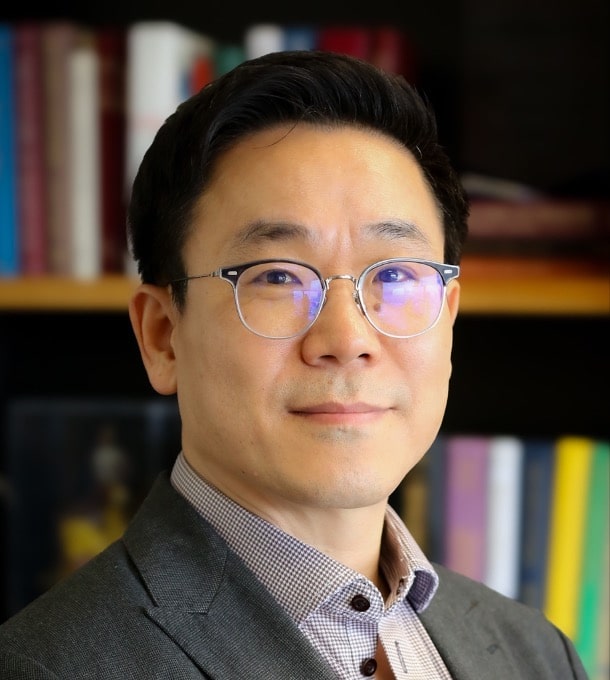
Heather M. Buzick is senior director of academic measurement research at ACT and editor-in-chief of Educational Measurement: Issues and Practice (EM:IP). At ACT, she leads a team whose work supports validity arguments for college and career readiness assessments and informs the use of test scores and assessment data in education decision-making. With training in educational measurement, statistics, and evaluation, her expertise includes large-scale assessment, validity, and the application of statistical methods to educational measurement problems. Dr. Buzick has conducted research using large-scale assessment databases in K–12 and postsecondary contexts, including state accountability, admissions, NAEP, licensure, and international assessment programs.

Yi Zheng, Ph.D., is an Associate Professor at Arizona State University and co-Editor-in-Chief of the Chinese/English Journal of Educational Measurement and Evaluation(CEJEME), a peer-reviewed bilingual journal of NCME. Dr. Zheng’s expertise spans traditional psychometrics, the development and validation of measurement instruments, computerized adaptive testing, and the emerging space of incorporating machine learning and AI technologies into measurement. Dr. Zheng has co-edited (with Dr. Okan Bulut) three special issues of CEJEME on AI & machine learning in educational measurement. She has also published her MxML project papers in EM:IP and CEJEME, characterizing the evolving landscape of AI/ML in measurement based on published literature and survey responses from measurement professionals.

Dr. Jiangang Hao is a Research Director at the ETS Research Institute. His research centers on leveraging AI, data science, and psychometrics to measure complex human skills, with a focus on collaborative problem-solving, communication, LLM-based automated coding and scoring, test security, and game-based assessment. His work helps advance psychometric methodology by bringing emerging computational and AI methods to the analysis of complex process data in digital learning and assessment. He has authored more than 100 publications and leads multiple large-scale research projects advancing the measurement of 21st-century skills. His work has been recognized through the ETS Presidential Award and an NCME annual award.
