
Candidate statements for the current Board of Directors election are available below. Eligible voting members will receive notices regarding voting in the election via the voting system: OpaVote. The election will occur from December 15–January 15 at 11:59 p.m. Eastern.
Vice President and President Elect Candidates
Statement of Candidacy
I believe measurement extends far beyond assessments and analysis, it is about creating opportunities for individuals to grow, excel, and shape their own futures, while enabling stakeholders to place confidence in professionals and educational institutions. As members of the measurement community, we have the responsibility and privilege of opening these doors through the design and delivery of high-quality assessments. My career as a consultant, and my active service within NCME, has been guided by this conviction and continues to be fueled by the belief that measurement is ultimately about trust, opportunity, and impact.
Within NCME, I’ve had the privilege of serving as Newsletter Editor, Publications Committee Chair, Program Co-chair, and Board Member. Each role gave me a different vantage point on how our community grows, debates, and innovates. Beyond NCME, I’ve contributed to the ICE R&D Committee and the ATP Board of Directors, experiences that broadened my perspective on how measurement connects education, certification, and licensure. Through these opportunities, I am continually impressed with the commitment to service by the members of our community. To that end, I am honored to be nominated for Vice President of NCME.

My academic foundation—a Ph.D. in Assessment and Measurement from James Madison University—set me on a career journey that has taken me from the Buros Center for Testing at the University of Nebraska–Lincoln, to leading certification and licensure efforts at Alpine Testing Solutions, and ultimately to co-founding ACS Ventures with two remarkable colleagues. Across these roles, my focus has been on strategic planning for exam programs, always with the goal of increasing efficiency and validity while keeping the human impact at the center.
I am running for Vice President and President Elect of NCME because I want to continue serving this organization and the broader measurement community. Our field is evolving rapidly, and NCME must remain a place where ideas from education, certification, and licensure intersect and inform one another. I think that NCME can not only adapt to this change but lead it.
If chosen to serve in this role for NCME, my goals would be to strengthen the identity of our profession and reinforce the value of measurement professionals in a world increasingly shaped by technology. At the same time, I would seek to build stronger partnerships with organizations that share our commitment to advancing high-quality measurement. By defining who we are and expanding the networks that support us, NCME can grow its position itself as a leader and a collaborator in this field.
Statement of Candidacy
NCME has been my professional home for over 30 years, and I am honored that the Nominations Committee invited me to run for the office of NCME Vice-President.
I have served on multiple NCME committees over the years, including helping to launch the Informing Assessment Policy Committee. Since then, my most active roles have been supporting two recent classroom assessment conferences. I was a co-organizer for the 2019 Boulder conference and a lead organizer and fundraiser for the 2024 Chicago conference. In both roles, I worked collaboratively with other organizations and individuals to create highly successful events that enhanced NCME’s already strong reputation.
I am currently the Principal Learning Associate at the National Center for the Improvement of Educational Assessment—better known as the Center for Assessment. Previously, I led the Center for 10 years as the executive director and eight years as its associate director. Before joining the Center, I was the assessment and accountability director for the Wyoming Department of Education for four years.

At the Center, I have led countless state and district efforts to design, implement, and evaluate their assessment and accountability systems and have supported states as they wrestle with challenging design decisions that often result in requests for proposals (RFPs) and new policies. In coordinating technical advisory committees for nine states (at present), I am often called upon to help states address many technical issues related to scoring, linking, standard-setting, and scaling. Currently, my colleagues and I are helping states integrate AI appropriately into the various components of the assessment cycle. I have been successful in this role because I work collaboratively with assessment company partners, state education department personnel, state policymakers, and local education representatives. My experiences with multiple constituencies will enable me to effectively collaborate with and attend to the most pressing issues affecting NCME’s membership.
I have focused my research and practical work on validity, balanced assessment systems, and the usefulness of assessment results. I am the co-author, with Suzanne Lane, of the validity chapter in the forthcoming 5th edition of Educational Measurement. I recently led, along with Jim Pellegrino and Amy Berman, a National Academy of Education project to update our conceptualization of assessment systems, resulting in the 2024 volume Reimagining Balanced Assessment Systems. I am honored to have been elected to the National Academy of Education in 2023.
I was grateful to have received NCME’s endorsement when I applied to be on the National Assessment Governing Board five years ago, and again this past spring. Serving as one of three measurement specialists on NAGB is one of my most rewarding volunteer positions. I’m thrilled that I was reappointed to a second four-year term to work alongside my NCME colleagues
Suzanne Lane and Willy Solano-Flores, and all of the other impressive board members. I believe I am representing NCME well in these challenging times for NAEP.
One of NCME’s goals is to create and maintain a vibrant, diverse, and inclusive community of measurement practitioners and researchers. Contributing to such a community has been a central goal of mine for more than 20 years. I founded the Center for Assessment’s internship program in 2004, and we have hosted a diverse group of highly-qualified graduate students every year since. Many of our past interns are now active members in the NCME community. Additionally, I have successfully provided opportunities for young scholars, especially those from underrepresented groups, to join several technical advisory committees. My background has prepared me to build upon NCME’s efforts to increase diversity and facilitate graduate student participation in our conferences and other programs. I will prioritize expanding graduate student initiatives, including supporting conference attendance, offering focused mentorship programs, and exploring postdoctoral support.
I am well-suited to support the implementation of NCME’s goal to increase and strengthen NCME’s partnerships to improve assessment policy and practice. I am closely connected to organizations such as the Council of Chief State School Officers (CCSSO), where I regularly interact with more than 40 state assessment leaders and a similar number of assessment company representatives. Further, I regularly meet with state boards of education, state legislators, state education chiefs, and key federal policymakers. I understand this world deeply and can help enhance and extend NCME’s growing networks. I’m proud that NCME has fought to protect federal funding and data collections. There is little doubt that we will continue to experience turmoil in federal and state policy and funding. Networking with like-minded organizations like the National Academy of Education, CCSSO, and AERA will be crucial as we navigate these challenging policy contexts. My extensive experience in local, state, and federal education policy will enable me to help NCME support our members through these uncertain times.
I am fortunate to have deep experience across multiple levels of the assessment world, from classroom assessment to NAEP. If elected, I would like to help NCME focus more on making score interpretations and their use more accessible to our various intended user groups. Since my days as the Wyoming assessment director, I’ve been concerned with the usefulness, or lack thereof, of assessment results. We have long treated score interpretations as if everyone needs to be a psychometrician. That’s not fair. If users were better able to interpret scores, which would help them improve student learning and school organizations, they might find more value in our assessments. My colleague Carla Evans and I recently summarized our thinking in Understanding Instructionally Useful Assessment.
I would be honored to build on the impressive work of previous presidents, particularly by enhancing the organization’s connection to policy and practice and by supporting the careers of young scholars and practitioners from an increasingly diverse community.
Thank you for your consideration.
Representative of a State or Federal Agency or Organization Candidates
Statement of Candidacy
I am honored to be nominated to the election slate of the NCME Board for the state-level representative role. I serve as the Chief Performance Officer for the Connecticut State Department of Education (CSDE) and have been in that position for more than a decade. In that capacity, I oversee student assessment, psychometrics, data collection, reporting, research, analyses, and accountability functions for the CSDE… and on occasion, even informational technology!
Under my leadership, the Performance Office at the CSDE has successfully:
- implemented the Smarter Balanced assessment system including summative and interim assessments;
- created and deployed a new longitudinal student growth model;
- established a multi-state science item bank and new science assessments;
- shepherded all CSDE assessments through rigorous federal peer review processes;
- developed a new data warehouse and reporting platform; and
- revamped the school and district accountability model.
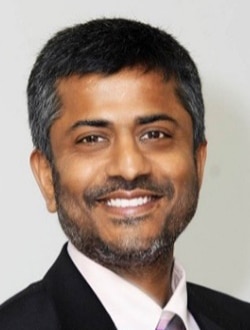
I have directed research, analyses, and evaluation activities that transform data into actionable information. During the pandemic, I led the creation of a ground-breaking research collaborative of public and private universities across Connecticut that is leveraging faculty expertise to support the state’s evaluation and research priorities. For the past three years, I have also served on the Smarter Balanced Executive Committee.
Over the years, the CSDE under my leadership, has published several studies and reports on topics including: postsecondary entrance/remediation/credit attainment; validating science assessment calibration and scoring process; effectiveness of a home visiting program to reduce absenteeism; student discipline; licensure assessment and educator certification; and relationship between assessments (e.g., Smarter Balanced interim and summative assessments, or Smarter Balanced Grade 8 and PSAT 8/9).
Prior to my current position, I coordinated Connecticut’s adult education system, particularly its assessment and accountability activities. I also served as the state’s GED Administrator and oversaw all activities related to test administration including examiner training, testing schedule, test security, monitoring, scoring, and results dissemination. I have published articles on topics such as learner retention, accountability, growth, and technology.
I believe deeply in the core notion of validity in measurement. I am passionate about supporting educators to thoughtfully employ the right mix of assessments to address their diverse needs. In my experience, many educators operate under the assumption that more assessment is better; they often fail to consider if the questions they are asking can be answered by any of the assessments used. I take a broad view of measurement that couples my deep knowledge of assessment with data from other dimensions. Understanding the relationship of assessments to these other dimensions can bring greater clarity and purpose to measurement. Ultimately, measurement is not an end but a means to better understanding and enhancing the experience and accomplishments of the human beings involved in the educational enterprise. If elected to the NCME Board, I look forward to doing my part to further the NCME’s mission of improving educational measurement for the benefit of society.
Thank you for the opportunity.
Statement of Candidacy
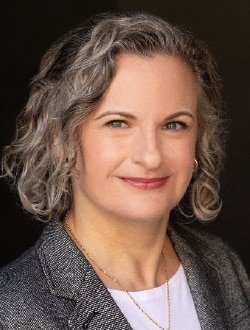
Howdy! My name is Chris Rozunick, and I am honored to be considered for a seat on the NCME Board of Directors. With nearly thirty years of experience in student learning and assessment, I am passionate about advancing our field and supporting the next generation of practitioners.
Currently, I serve as Senior Division Director of the Assessment Design, Development, and Quality Division at the Texas Education Agency. My team leads content development, assessment creation, and psychometric analysis, and we are driving a comprehensive overhaul of both our summative assessment system and English language proficiency assessment. We also vet a portfolio of early childhood assessments to ensure quality and effectiveness.
Prior to rejoining TEA in 2021, I gained a wide range of experiences that shaped my perspective. During graduate school at Florida State, I interned with the Florida Department of Education’s assessment team, focusing on quality control for high school competency exams and the first version of FCAT. I spent several years at a non-profit analyzing assessment data to improve student performance, and nearly fifteen years at Pearson and NWEA, where I contributed to content and test development as well as business development.
If elected to the NCME Board of Directors, I am committed to fostering initiatives that help practitioners—especially those new to the field—develop a broad range of skills. I believe our collective success depends on understanding the bigger picture and collaborating across teams, rather than focusing solely on individual responsibilities.
I am eager to help expand the research base for assessment design, development, and administration within our states. Key questions I hope to address include: How do state leaders prioritize research? How can Technical Advisory Committees be leveraged to drive agency goals? And how can we best share the research we generate for the greater good? These are important topics I would like to advance as a board member.
Thank you for considering my candidacy. I look forward to the opportunity to contribute my experience, leadership, and vision to the NCME Board of Directors.
Board Member at Large Candidates
Statement of Candidacy
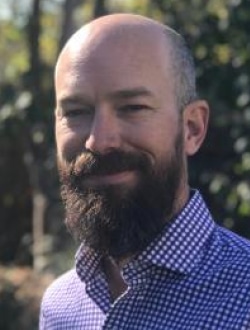
Hello! Given that you are likely reading through lots of these statements rapidly, I’m going to lead with the good stuff and start by describing what I would bring to my service on the NCME board. Alongside normal stewardship activities, I would like to focus on two activities:
- I would encourage engagement with the edtech sector as many firms in this space are engaged with—or claim to be doing—educational measurement. Enhanced engagement with such firms would allow for them to learn about key principles of educational measurement and, in the long run, might increase the breadth of NCME membership. Being located at Stanford offers enhanced opportunities to connect with many such firms.
- Increasing open science practices in educational measurement. Much research in educational measurement relies on data that cannot be publicly shared. In my view, this acts as a bottleneck and limits reproducibility of associated research. I would like to help the field find solutions to this problem by, for example, helping to build platforms for generating synthetic data that can be shared in place of ‘real’ data.
I believe that advances in these two areas would contribute to broadening NCME’s membership and enhancing the impact of scientific research done by NCME members.
I began attending NCME meetings as a PHD student in 2008. I have been actively involved with the organization including serving as the co-chair of the program committee in 2022 and the current chair of the History and Archives committee. In my view, the coming years will likely be a time of flux for educational measurement. There are policy shifts at the federal and state levels and technological innovations related to testing that will unsettle the educational measurement ecosystem that has developed since the passage of NCLB. NCME needs to play a leading role during this time of change and I would be excited to play a small part in that endeavor.
I am currently an associate professor in the Graduate School of Education at Stanford University. At present, my research focuses on building better data resources for use in methods research in educational and psychological measurement—in particular, I lead development of the Item Response Warehouse—and using such resources to conduct methodological research. More information on my research can be found at my website.
Statement of Candidacy
I’m honored to be considered for membership on the NCME Board. I’ve benefitted greatly from my involvement in NCME, and I’m eager to give back by helping the organization support educators and learners as they navigate numerous technological and societal challenges.
My background combines extensive research experience with practical applications. After earning a Ph.D. in educational psychology and a master’s in statistics from Stanford, I held research and leadership roles at RAND, ETS, and AIR. Now at the Center for Assessment, I provide evidence-based guidance to education agencies and nonprofits. My work has consistently emphasized impact and engagement with the constituencies that can both inform and benefit from it. I’m especially interested in applying measurement to advance the economic and civic purposes of education and to improve the conditions that enable all learners to thrive.

My NCME service began when I chaired the Graduate Student Issues Committee and has included roles on the Committee on Informing Assessment Policy and Practice and the NCME Book Series editorial board. I also serve on the Joint Committee revising the AERA/APA/NCME Standards for Educational and Psychological Testing, and I’m looking forward to helping make the Standards more accessible and relevant to diverse users.
Beyond NCME, I’ve served on National Academies committees, state technical advisory committees, and other research and advisory panels, and I’ve held editorial and committee roles in AERA, SREE, and other organizations. I’m an AERA fellow and recipient of CASEL’s Joseph A. Zins Distinguished Scholar Award. I’ve also been deeply engaged in mentoring, including in the organizations in which I’ve worked and in the broader field (e.g., participating in NCMEntoring, facilitating Women in Measurement mentoring sessions).
If elected, I’ll work to understand the NCME community’s needs and build on the strong initiatives that NCME has in place to help address those needs. I hope to advance two goals in particular.
The first is to raise NCME’s visibility and influence by expanding access to practical, user-friendly resources that promote responsible assessment and data use. I want to help make our work, including the Standards, easier to understand and apply by devising accessible derivative products and tailoring engagement strategies to diverse constituencies. I’d especially like to expand supports for educators and caregivers, who need to make sense of data to guide students’ development and to navigate the evolving school-choice landscape. I also hope to help the broader research and evaluation community engage in sound measurement practices. Strengthening ties with organizations like AEFP, SREE, and APPAM would be mutually beneficial (and might even result in fewer phrases like “the test is valid and reliable…” appearing in research reports).
A second goal is to enhance professional learning, career guidance, and mentorship for all members. I’d love to expand NCME’s already-strong resources to assist members pursuing nontraditional paths or navigating mid- and late-career transitions, especially given recent job losses among members of our community. In addition, technological and methodological advances require frequent retooling of knowledge and skills. I’m interested in engaging NCME colleagues, particularly our talented graduate students and early-career professionals, to develop and regularly update resources for continuous learning to support all NCME members.