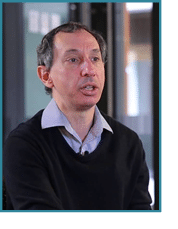
In this digital ITEMS module, Dr. Robert Mislevy and Dr. Maria Elena Oliveri introduce and illustrate a sociocognitive perspective on educational measurement, which focuses on a variety of design and implementation considerations for creating fair and valid assessments for learners from diverse populations with diverse sociocultural experiences.
Module Overview
In this digital ITEMS module, Dr. Robert [Bob] Mislevy and Dr. Maria Elena Oliveri introduce and illustrate a sociocognitive perspective on educational measurement, which focuses on a variety of design and implementation considerations for creating fair and valid assessments for learners from diverse populations with diverse sociocultural experiences. The first part of the module, narrated by Dr. Mislevy, contains a general overview section, a description of the sociocognitive framing of assessment issues, and a section on implications for assessment around key concepts such as reliability, validity, and fairness. The second part of the module, narrated by Dr. Oliveri, contains a section on frameworks for fairness investigations and principled assessment design as well as brief vignette-based illustrations of the principles using a prototype activity to support collaboration and communication skills in the workplace. The module is designed to provide a relatively high-level, conceptual, and non-statistical overview and is intended for interdisciplinary team members who need to create fair and equitable learning and assessment systems for diverse populations.
Bob Mislevy, Lord Chair in Measurement and Statistics
Dr. Robert [Bob] Mislevy is the Frederic M. Lord Chair in Measurement and Statistics at Educational Testing Service as well as Professor Emeritus of Measurement, Statistics, and Evaluation at the University of Maryland, with affiliations with Second Language Acquisition and Survey Methods. Dr. Mislevy’s research applies developments in statistics, technology, and cognitive science to practical problems in educational assessment. His work includes a multiple-imputation approach to integrate sampling and psychometric models in the National Assessment of Educational Progress (NAEP), an evidence-centered framework for assessment design, and simulation- and game-based assessment with the Cisco Networking Academy. Among his many awards are AERA’s Raymond B. Cattell Early Career Award for Programmatic Research, NCME’s Triennial Award for Technical Contributions to Educational Measurement (3 times), NCME’s Award for Career Contributions, AERA’s E.F. Lindquist Award for contributions to educational assessment, the International Language Testing Association’s Messick Lecture Award, and AERA Division D’s inaugural Robert L. Linn Distinguished Address Award. He is a member of the National Academy of Education and a past president of the Psychometric Society. He has served on projects for the National Research Council, the Spencer Foundation, and the MacArthur Foundation concerning assessment, learning, and cognitive psychology, and on the Gordon Commission on the Future of Educational Assessment. His most recent book is “Sociocognitive Foundations of Educational Assessment” for which he received the 2019 NCME Annual Award and on which this ITEMS module is based.

Maria Elena Oliveri, ETS
Dr. María Elena Oliveri is a Research Scientist in the Academic to Career research center at the Educational Testing Service (ETS). Her research focuses on fairness, validity, diversity, equity, and innovative assessment design and development of competency-based digital formative assessments of 21st century skills. She has actively disseminated her research in numerous published articles in journals such as Applied Measurement in Education and the International Journal of Testing; she has led various professional development workshops at national and international conferences such as AERA, NCME, and ITC; and she has presented at numerous national and international conferences. In earlier stages of her career, she was a literacy mentor to second-language teachers in the Vancouver School District as well as a teacher of second language learners and students with disabilities and she has hosted workshops for educators on innovative approaches to assessing culturally and linguistically diverse learners. She also was a lecturer at the University of British Columbia, Vancouver, Canada where she taught courses on assessment and developmental psychology to students pursuing Bachelor of Education degrees in French Immersion programs.
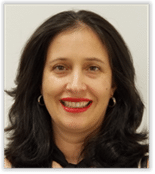
Philip Jones, University of New South Wales
Philip is Professor Emeritus at the University of New South Wales (UNSW) where he was the Associate Dean in Education for UNSW Medicine for 10 years until his retirement in 2016. He was a senior staff specialist in the Department of Infectious Diseases at the Prince of Wales Hospital and held a conjoint appointment to the Prince of Wales Clinical School. He was involved with the development of the Medicine program from the inception of its planning in 1998. In 2010, he received the Vice-Chancellor’s Award for Teaching Excellence at UNSW.
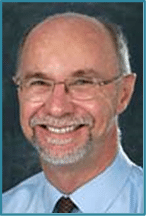
Boaz Shulruf, University of New South Wales
Boaz is an Associate Professor who works in the Office of Medical Education at the University of New South Wales (UNSW) who is also an Honorary Associate Professor at the University of Auckland. His main research interests are in the area of psycho-educational assessment in higher education, particularly within the context of Medical and Health Sciences Education. He has expertise in quantitative research methodologies and educational assessment and psychometrics. He supervises Independent Learning Project students in medical education and educational measurement.
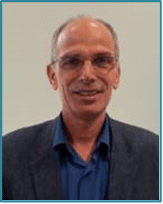
Gary Velan, University of New South Wales
Gary is a professor, Associate Dean, Head of the Department of Pathology, Director of Learning and Teaching Development, and Head of the Educational Research and Development Group in the School of Medical Sciences at the University of New South Wales (USNW). His research is based on educational innovations, including web-based assessments, virtual microscopy adaptive tutorials, concept and knowledge maps, and their effect upon learning outcomes in medical education.